Privacy fencing for suburban Australian backyards
How to get real backyard privacy in Australian suburbs without a neighbour war — height, screening, 2.1-metre fences, and materials that actually block the sightline.
By Helen Crowe · 8 May 2025 · Updated 2 September 2026
Privacy in an Australian backyard is not a personality flaw. It is the difference between eating dinner under the Hills hoist and eating dinner for an audience in the second-storey window next door. The mistake is to treat privacy as a single 2.1 metre wall and then wonder why the neighbour is angry and you can still see through the slats.
Start with the sightline. Stand where you actually sit — the deck at West End, the spa, the trampoline — and look. The fence only has to fix that. Sometimes the fix is 1.8 metres of solid fence and a climber. Sometimes it is 2.1 metres on one boundary. Occasionally it is a screen that is not on the boundary at all.
What “privacy” means on a suburban Australian block
Blocks have got smaller. Houses have got bigger. Two-storey knock-downs in the middle-ring suburbs of Sydney, Melbourne and Brisbane look straight into yards that were designed for a single bungalow and a lemon tree. A standard 1.8 metre dividing fence, which is still the Australian default, covers you when both gardens are at the same level and nobody has built a deck.
It does not cover you when:
- the neighbour’s living room is a storey up
- your deck sits 600 millimetres off the ground
- a battleaxe driveway runs along your kitchen window
- the block falls so their patio is already looking down
- you have a pool, and the people on the pool deck can see and be seen
Write those down. They are the brief. A fence that does not answer them is just a dearer version of the old one.
1.8 metre versus 2.1 metre privacy fences
1.8 metres is what most Australian suburban fences already are — the height contractors price first, and what many neighbours accept as normal. On a flat pair of backyards it hides a person standing, more or less, and not a person on a deck.
2.1 metres is the usual next step. It changes the feel of the yard, the wind load, and sometimes the planning conversation. On a side or rear boundary many households build it with the neighbour’s agreement. On a street frontage a 2.1 metre solid wall is much more likely to annoy the council. There is no single national height I can honourably invent.
If the fence is also a pool barrier, AS 1926.1 — the Australian Standard for swimming pool barriers — brings its own height and climbability rules. A lattice or slat strip on a sound 1.8 metre fence can break a sightline without rebuilding the posts. It is a poor answer if you needed a solid wall.
Screening materials that actually block a sightline
Solid COLORBOND® or paling. Still the workhorse. A COLORBOND versus timber paling choice here is about maintenance, termites and the neighbour’s eye, not about privacy theory. Both can be 1.8 or 2.1 metres. Both fail if the ground falls and you forget to step the panels so the downhill end is suddenly 1.5 metres.
Aluminium slats. Horizontal slats are fashionable and they are not automatically private. A 20 millimetre gap at eye height from a deck is a picture window. Tight gaps, a deeper slat, or a second layer will get you there; they also push the job toward the upper end of slat fencing cost. Use slats where you want filtered privacy and breeze — a side of the deck, a street-facing screen — and solid sheet where you want a stop.
Lattice and timber screens. Cheap, repairable, and honest. Pine lattice weathers. Hardwood looks better and costs more. Fix it to a frame that can take the wind, not to a paling that is already dancing.
Plants. A lilly pilly, a contained bamboo, a climber on a galvanised panel: still the kindest privacy in older suburbs, and slower. It does not replace a fence where a dog or a pool barrier is involved.
Masonry. A high rendered wall will give you privacy and a shadow you may regret in a small courtyard. It is a footing conversation, not a screening product.
Avoid the fake. A “privacy slat” with a 40 millimetre gap will not survive the first Saturday barbecue.
Neighbours, dividing fences and asking for more height
The various dividing-fences laws — New South Wales and Western Australia’s Dividing Fences Acts, Victoria’s and South Australia’s Fences Acts, Queensland’s neighbourhood disputes framework, and the equivalents elsewhere — are about a sufficient fence and a shared cost. Sufficient is usually the ordinary local dividing fence, not a 2.1 metre designer screen in a dark powdercoat.
If you want taller or dearer than sufficient, you talk. You often pay the difference. You put it in writing. You do not start with a Saturday demolition and a text that says “hope that’s ok”. The longer version is who pays for a dividing fence.
Offer the same finished face on their side. COLORBOND® does this by default; timber does not unless you pay for it. Show a colour sample in daylight. A 2.1 metre Monument wall on the north of a small yard is a horticultural event. If the fence is not on the boundary, get the line sorted first.
When the backyard fence is also a pool barrier
A backyard privacy fence and a pool fence are allowed to be the same structure only if the pool rules are met. AS 1926.1 is the standard that governs swimming pool barriers in Australia. In plain English: the barrier has to be the right height, it has to be non-climbable, the gate has to be self-closing and self-latching and swing away from the pool, and the non-climbable zone has to stay clear of barbeques, pot plants and stacked timber.
Horizontal slats, decorative cut-outs, a handy rail, a tree against the fence — these are how backyard design and pool safety fall out. If the boundary fence is doing barrier duty, read COLORBOND boundary fences as pool barriers and do not assume a pretty screen will pass. Local council and state pool laws apply on top of the Standard. This is not the job for a hopeful DIY weekend.
How to plan a privacy fence that you will still like
Walk the yard at the time of day that bothers you. Mark the sections that need to be solid, the sections that can breathe, and the sections that should just be a decent dividing fence. Privacy disappears at the low end of a stepped run. A solid high fence on a Brisbane ridge or an Adelaide plains westerly needs posts that match the sail.
Taller sheets, extra posts and planting sit on top of the ordinary per-metre cost, and they vary by city, ground and access. Sometimes the cheapest privacy is not on the boundary at all — a pergola screen, a shifted table, a higher sill. When the fence is the tool, build the height you need on the side you need, and leave the rest of the block ordinary.
Frequently asked questions
Can I build a 2.1 metre privacy fence on my boundary?
Often, on a side or rear boundary, if the neighbour is in and your council does not treat that height as something that needs approval on your particular block. A 2.1 metre solid fence facing the street is much more likely to be a planning problem. Confirm both conversations before you order taller sheets.
What is the best privacy fence for an Australian backyard?
The one that closes the real sightline. Solid 1.8 or 2.1 metre COLORBOND® or paling still does most suburban jobs. Slats, lattice and plants are for filtered privacy and for the bits a wall cannot fix. Match the material to termites, wind, pool rules and the neighbour, not to a single catalogue photo.
Do I need my neighbour’s permission for a higher fence?
In practice, yes, if it is a dividing fence. The dividing-fences laws are built around a sufficient, ordinary fence. Extra height or a dearer finish is a request, and often a cost you should expect to carry. Write down what you both agreed before anyone mixes concrete.
Filed under Residential fencing. Corrections: contact the desk.
More in Residential fencing
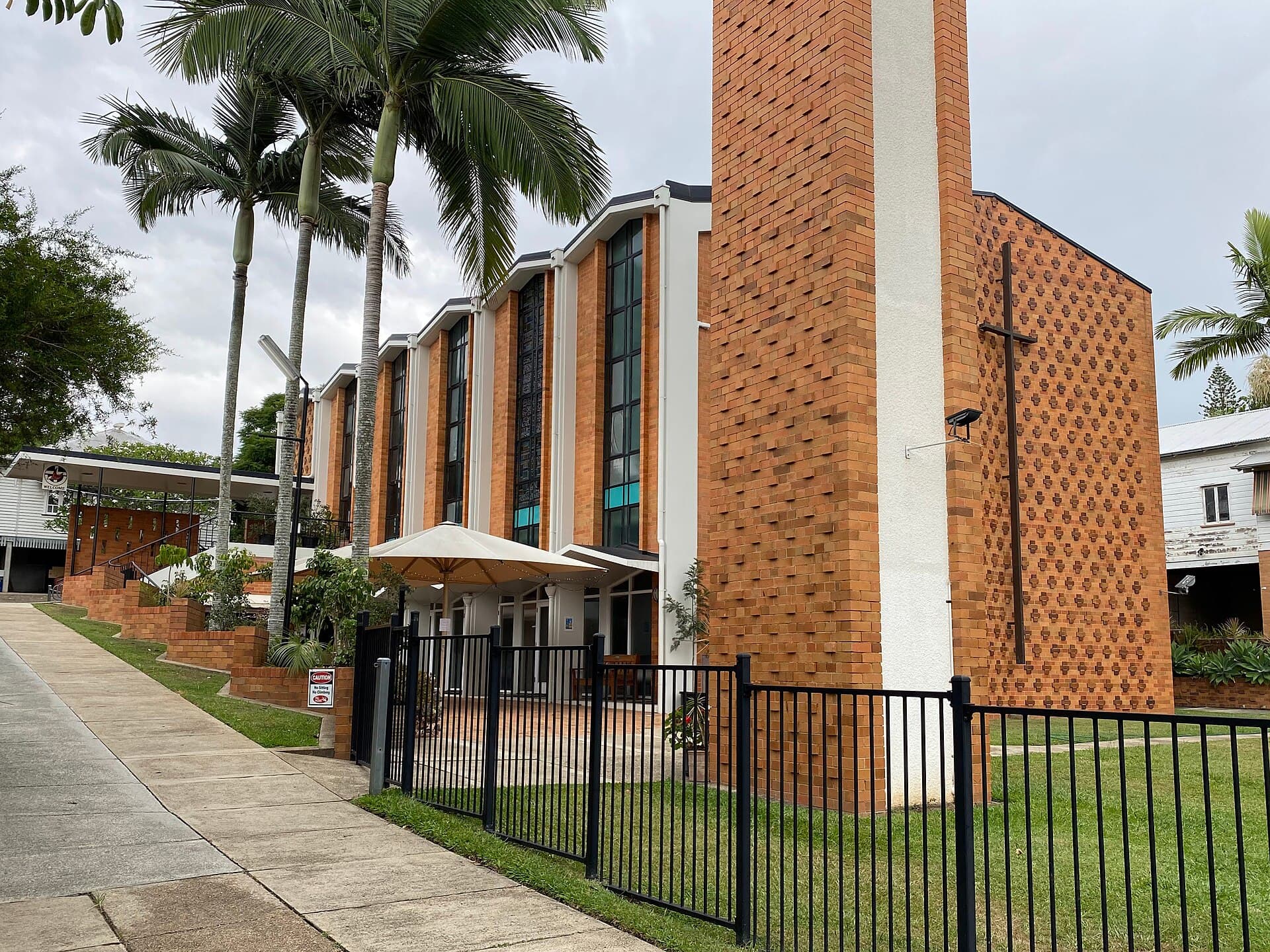
Front fence ideas for Australian homes
Front fence ideas that work on Australian streets — pickets, steel, masonry and slats — plus the council height and character rules that quietly decide the job.
Helen Crowe · 16 April 2025
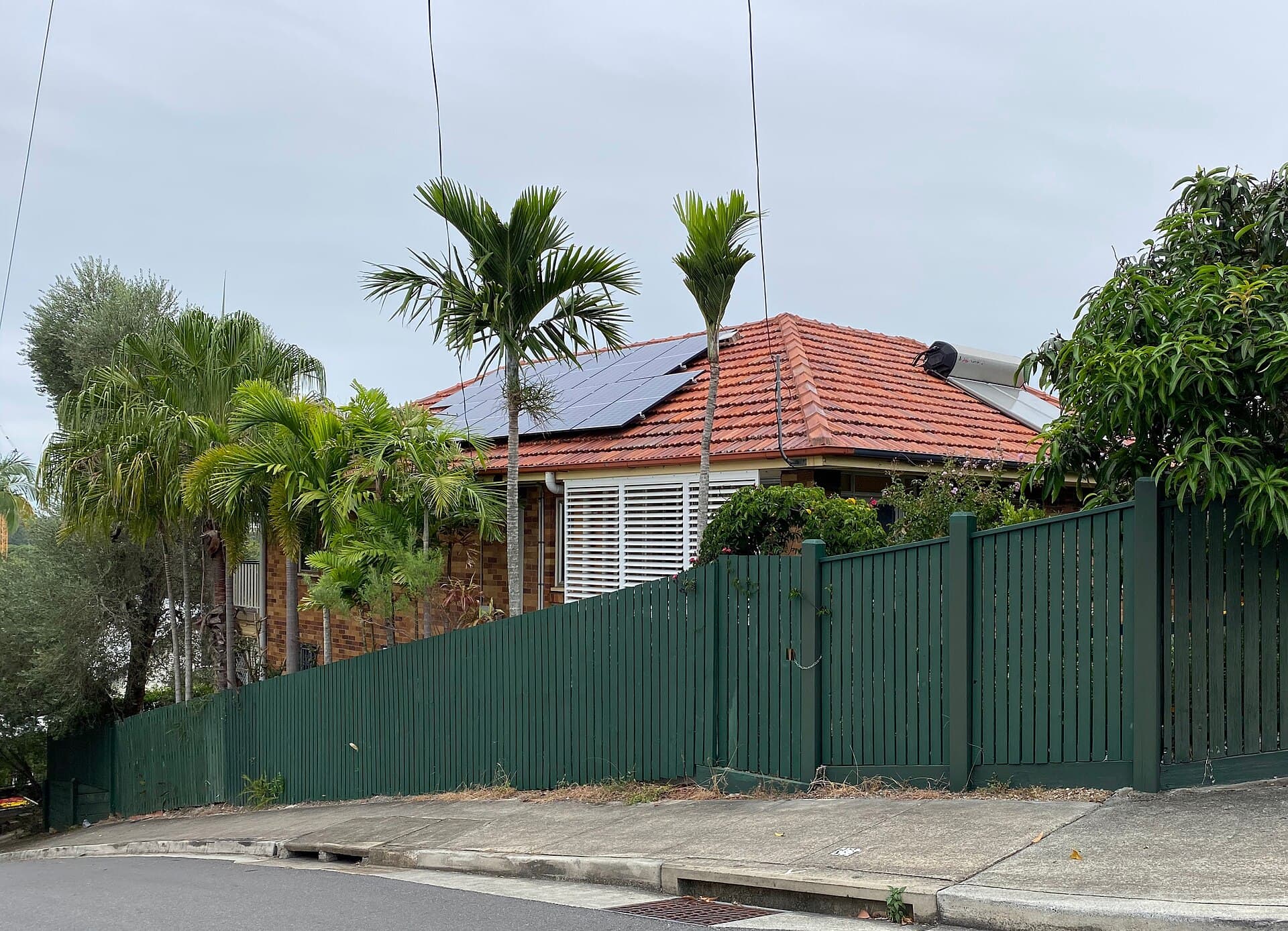
Fencing cost in Australia, a practical per-metre guide
What Australian homeowners actually pay for paling, COLORBOND, slat and masonry fences — per-metre ranges, extras that blow quotes, and how to compare like-for-like.
Helen Crowe · 4 March 2025
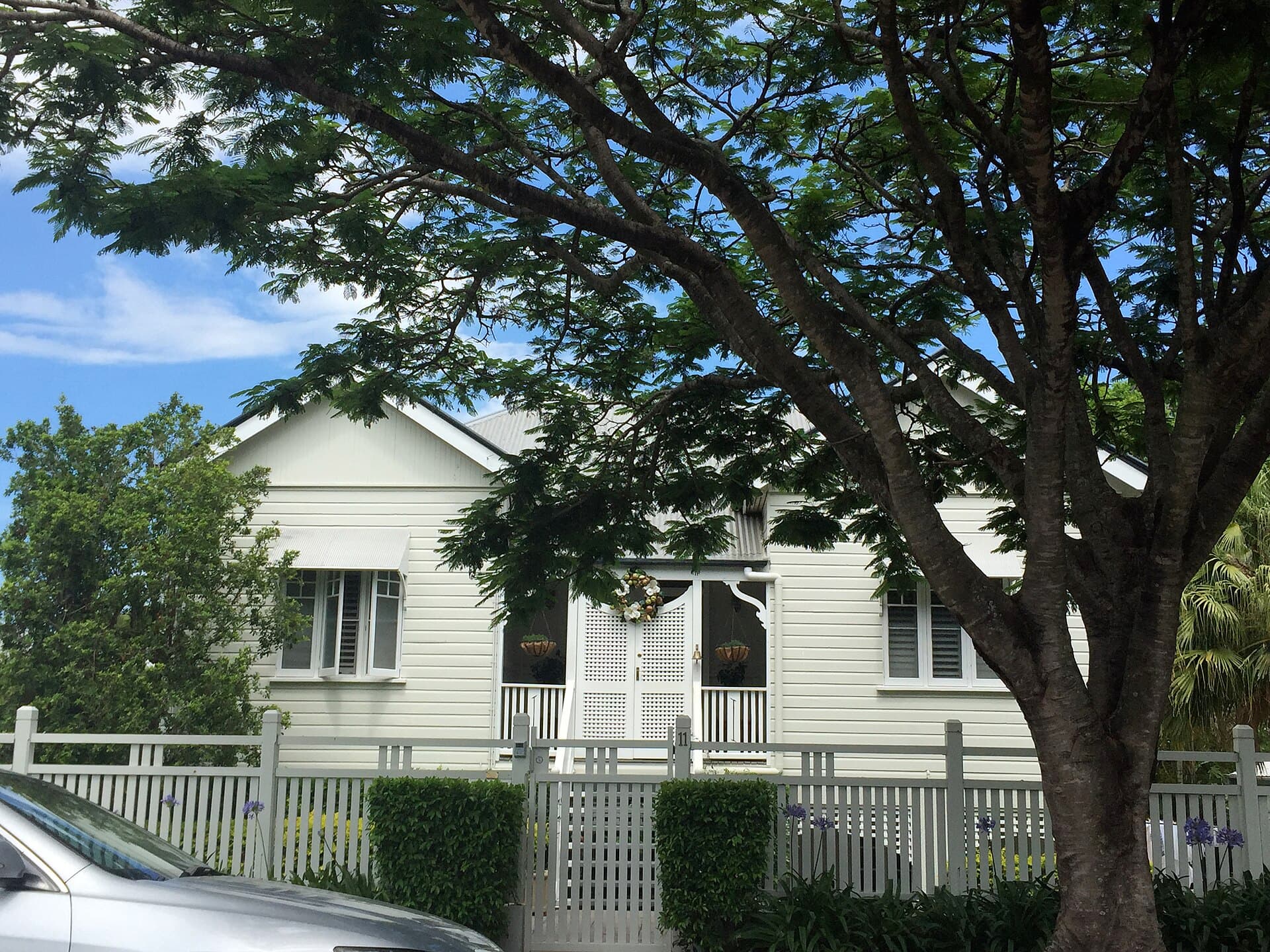
COLORBOND versus timber paling fence in Australia
A practical comparison of COLORBOND steel and timber paling for Australian boundary fences — cost, lifespan, neighbours, climate and when each material earns its keep.
Helen Crowe · 11 February 2025