COLORBOND versus timber paling fence in Australia
A practical comparison of COLORBOND steel and timber paling for Australian boundary fences — cost, lifespan, neighbours, climate and when each material earns its keep.
By Helen Crowe · 11 February 2025 · Updated 4 August 2026
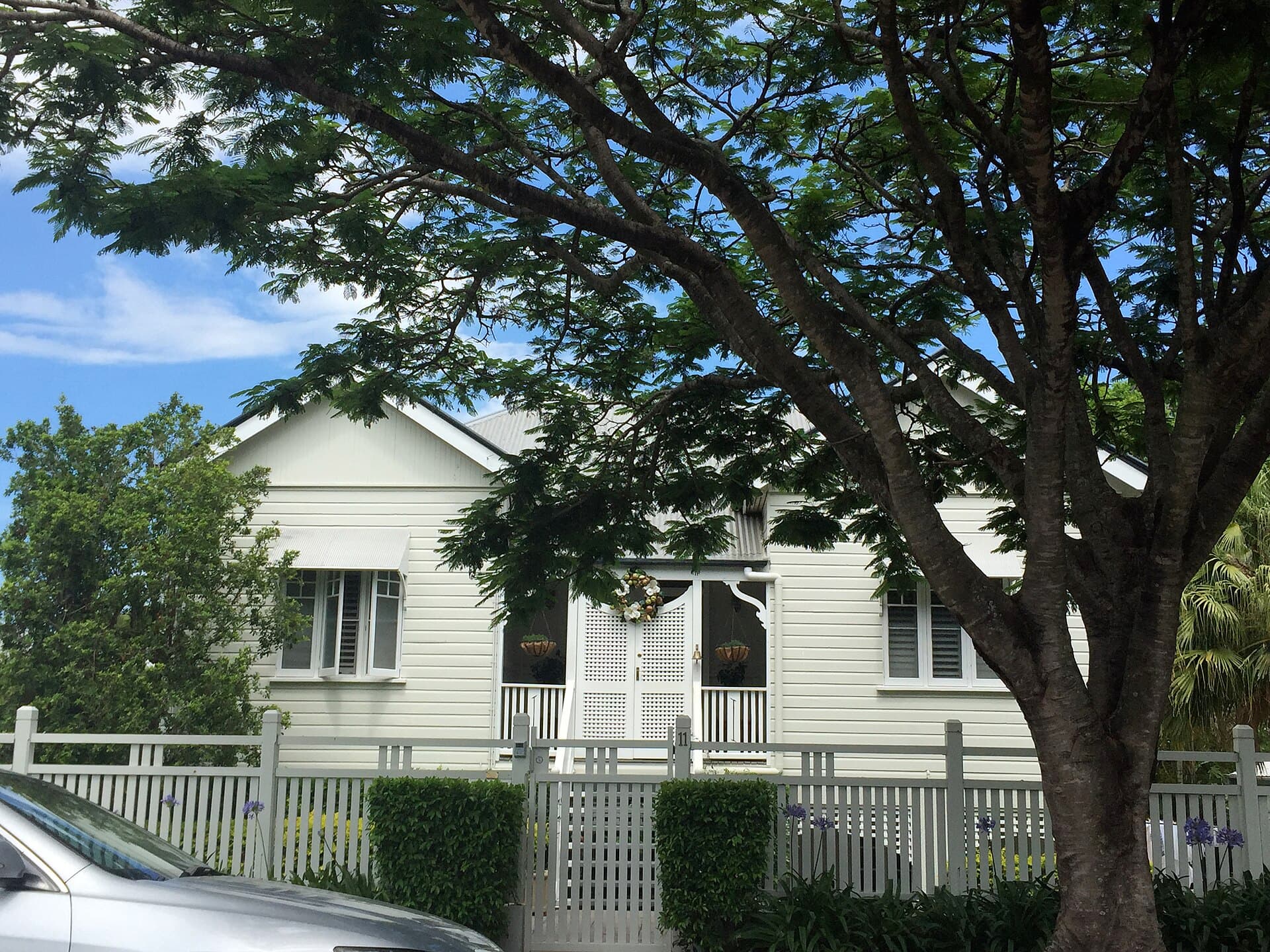
Stand on a suburban boundary with a string line and the argument is almost always the same. One household wants the quiet of a COLORBOND® steel run — same colour both sides, no painting, no termites. The other still likes a timber paling: it weathers, it can be stained, and it looks like a house rather than a new estate. Both are honest Australian fences. The useful question is which one suits this block, this neighbour, and this climate.
COLORBOND® is a registered trademark of BlueScope. It is a pre-painted steel finish, not a generic sheet off a hardware rack. Timber paling, in the modern suburbs, almost always means treated pine.
COLORBOND vs timber paling fence: the practical differences
A typical COLORBOND® boundary fence is a steel post-and-rail frame with pre-painted fencing sheet, a capping rail, and — if the installer is doing the job properly — a concrete or steel plinth so the sheet does not sit in wet soil. Both faces look finished. That “good neighbour” look is why steel has taken so many side boundaries in places like Springfield Lakes, Pakenham and the newer edges of Adelaide.
A timber paling fence is posts, rails and vertical palings, usually 1.8 metres high. The tidy face is the garden side; the back shows rails unless you pay for lapped-and-capped or a “good neighbour” paling. Palings cup, silver off, take a stain, and accept a repaired board on a Saturday morning, which steel does not. Neither fence is a retaining wall.
How much does a COLORBOND fence cost compared with paling?
Treat every figure here as a range, not a promise. Installed prices move with the city, the ground, the access, the height and whether an old fence has to come out. A straightforward 1.8 metre treated-pine paling on a clear, level suburban run commonly lands somewhere in the region of $80 to $160 a metre installed. A comparable COLORBOND® run often sits around $100 to $200 a metre. Steep clay, no side access, extra gates, 2.1 metre sheets or a lapped hardwood paling will push either number around.
What blows a quote is rarely the sheet. It is demolition of an old concrete-plinth fence, rock in the post holes, a rear lane that will not take a truck, or a neighbour who wants the new line on the survey rather than on the leaning palings. Read those extras beside the fencing cost guide before you compare two pieces of paper. A short terrace run in Paddington or Fitzroy can cost more per metre than a long, easy estate boundary because labour still has to arrive.
How long does each fence last in Australia?
Ask for a lifespan and a truthful installer will talk about the posts. A COLORBOND® fence kept off the soil, away from salt spray, is often still respectable after fifteen to twenty-five years. BlueScope publishes warranty terms that depend on the product and how close you are to breaking surf. That is a warranty, not a crystal ball.
A treated pine paling fence is more of a living thing. Palings on the sunny north face silver and cup; posts in wet clay fail first. With H4 or H5 posts and a bit of care, fifteen years is fair and twenty is not rare. In damp, termite-active pockets of Brisbane or the New South Wales north coast you can lose posts much earlier. Steel does not feed termites. In bushfire country — the Dandenongs, Adelaide Hills, Blue Mountains, Perth hills — steel is the less anxious choice.
Which fence is better for coastal salt, clay soil and termites?
Coastal salt. Within a few hundred metres of breaking surf at Manly, Cottesloe, Glenelg or the Sunshine Coast, steel needs the right grade and careful detailing — cut edges, fasteners, and a plinth that keeps the sheet out of damp sand. Timber weathers fast but does not rust. If you are truly in the spray, read the coastal fencing notes before you lock a colour.
Reactive clay. Melbourne’s west, the Adelaide plains and parts of western Sydney move. A steel frame shows a stepped line more cleanly; a paling fence announces the clay by opening gaps. Deeper holes matter more than the brand on the sheet.
Termites and wind. Treated pine resists termites; it does not dare them. Keep posts out of sitting water. Steel removes that worry. A solid 2.1 metre steel fence is still a sail — size the posts for the southerly.
Do neighbours have to agree on COLORBOND or paling?
Dividing-fences law in Australia is state and territory business — the Dividing Fences Act in New South Wales and Western Australia, the Fences Act in Victoria and South Australia, Queensland’s neighbourhood disputes laws, and the equivalent rules in Tasmania, the ACT and the Northern Territory. In plain English, adjoining owners are generally expected to share the cost of a sufficient dividing fence. Sufficient usually means a basic, standard fence for the area — historically a paling — not whichever architectural finish you saw on Instagram.
If you want COLORBOND® and the neighbour is only obliged to contribute to a sufficient paling, you should budget to pay the difference unless they agree. Give written notice, keep the tone neighbourly, and do not concrete until the line is agreed. The longer version lives in who pays for a dividing fence. If the old fence is not on the boundary, stop and sort the survey before you pick a colour.
A courtesy that still matters on a timber job: the neater face traditionally looks toward the neighbour. Steel makes that argument disappear, which is one reason people reach for it after a tense letter.
Can you mix steel posts with timber palings?
Yes, and on a lot of older blocks it is the grown-up answer. Steel posts in concrete, timber rails and palings — you keep the repairability of timber and give the ground the post it actually wants. It costs more than a cheap pine post and less than pretending a rotting one will last.
Hybrids also help on a slope. Timber palings can be stepped in even increments; steel sheet is usually stepped in panel widths. A fussy fall in Toowong or Bondi is often prettier in timber, or in steel set out by someone who cares about the string line.
When to choose steel, timber, or something else
Choose COLORBOND® when you want both sides finished, you are tired of painting, you live with termites or bushfire risk, or you need the fence up quickly on a clear site. Pick a colour that will still look like a house in ten years.
Choose timber when the street is already timber — Ascot, North Adelaide, older Fremantle — or when you want to stain, attach climbers, or repair a paling at a time. Budget for maintenance.
A front fence is a council and character problem. A 2.1 metre privacy screen is a neighbour problem. Aluminium slats earn their keep where you want air. Masonry is a foundation decision, not a weekend upgrade.
Walk the line first. Find the pegs. The material is the second decision. The first is whether the fence is actually going where everyone thinks it is.
Frequently asked questions
Is a COLORBOND fence cheaper than a timber paling fence?
Not always. Installed prices overlap, and they vary by city, ground and access. A straightforward 1.8 metre COLORBOND® run is often a little dearer than a basic treated-pine paling. Hardwood, a lapped-and-capped finish, steep clay or a site with no truck access can make timber the expensive one. Compare quotes on the same height, the same gates and the same demolition.
Which fence lasts longer in Australia?
A well-installed COLORBOND® fence with a proper plinth often outlasts a neglected paling, especially where termites and wet posts are the local sport. Timber can match it if the posts are the right hazard class and someone is willing to replace a board and keep soil off the line. Coastal salt and bushfire shift the odds toward steel.
Do I have to use the same material as my neighbour?
No. The various dividing-fences laws care about a sufficient fence and a fair share of cost, not a matching pair of colour charts. If your taste is dearer than a basic sufficient fence, expect to pay the extra unless the neighbour is genuinely in. Write it down before the concrete truck arrives.
Filed under Residential fencing. Corrections: contact the desk.
More in Residential fencing

Privacy fencing for suburban Australian backyards
How to get real backyard privacy in Australian suburbs without a neighbour war — height, screening, 2.1-metre fences, and materials that actually block the sightline.
Helen Crowe · 8 May 2025
Front fence ideas for Australian homes
Front fence ideas that work on Australian streets — pickets, steel, masonry and slats — plus the council height and character rules that quietly decide the job.
Helen Crowe · 16 April 2025
Fencing cost in Australia, a practical per-metre guide
What Australian homeowners actually pay for paling, COLORBOND, slat and masonry fences — per-metre ranges, extras that blow quotes, and how to compare like-for-like.
Helen Crowe · 4 March 2025