Driveway gates for suburban blocks — sliding, swing and automatic
How to choose a suburban driveway gate that still works after a storm — sliding versus swing, automation, safety beams, and the site details that decide the hardware.
By Tom Laird · 18 September 2025 · Updated 5 June 2026
A driveway gate is the fence people use every day and the first thing a storm tries to peel off. On a suburban block it also has to miss the footpath, miss the letterbox, miss the car that parks a little too close to the boundary, and still look like it belongs with the rest of the screen.
Sliding or swing, manual or automatic, steel sheet or an open grille — the hardware is the easy catalogue part. The site is the specification: fall, wind, salt, the power point, and whether you can get a trailer in when the motor dies. This is suburban practice, not a locksmith’s certificate and not a structural opinion for a cyclone-rated estate. For the surrounding craft, stay with install and maintain.
Sliding versus swing: let the driveway vote
A swing gate needs room for the leaf. Two leaves need a meeting point that stays in line when the posts move. If your driveway falls toward the street, a swinging leaf will either bind on the rise or hang in the air and look drunk. If the arc crosses a public footpath, many councils will have a view, and so will the first pram.
Sliding gates run along a track or, on some systems, cantilever past a set of rollers. They ask for a run-back along the fence — typically a little more than the opening width — and a track that will not silt up with gravel, leaves and the crushed rock everyone swore they would not drive off. They suit short, steep aprons and blocks where the car sits close to the boundary.
Openings should be measured as clear width between posts, with the car you actually own plus mirrors plus the trailer you borrow twice a year. A “standard 3.6” that looks fine on a plan is tight on a dual-cab at an angle.
Match the infill to the fence if you want the front to read as one job. A Colourbond sliding leaf on a Colourbond boundary is a consistent wind sail; an open steel grille lets wind through and shows the bins. Colour and profile choices for the matching screen are covered in Colourbond colours and profiles.
Automation, safety and the unglamorous kit
Motors, racks, photocells, loops and a button on the kitchen wall are a system. The motor wants a clean leaf that does not bind. The photocells want a line of sight that the hedge will not eat in November. The manual release wants to be reachable when the power is out and it is raining.
Safety is not optional decoration. A sliding leaf is a shearing machine along the fence. A swing leaf is a crushing machine at the hinge and at the car. Use the safety devices the manufacturer specifies — typically photocells at a minimum, and more on sites with children, steep grades or poor sight lines. Test them the way you test a pool gate: on purpose, regularly.
Mains work is for a licensed electrician. So is anything that lands in the switchboard. Low-voltage kits still need a power supply that is not an extension lead under a mat. Solar automation exists and still needs an honest winter sun, a battery you will replace, and the same safety devices.
Remote cloning and cheap online extras are how people discover their neighbour can open the garage. Ask the installer how transmitters are coded and what happens when you lose one.
If the gate is also part of a pool barrier, stop. A driveway leaf is almost never a substitute for a certified AS 1926 barrier. Do not “save a gate” by making the driveway the only thing between a toddler and the water.
Posts, tracks and the ground that moves
Gate posts are not fence posts with a confident look. They take a live, swinging or sliding load, every day. On clay, that load arrives just after a wet week when the rest of the fence has already heaved. Oversize the footings, use the specified steel, and do not hang a 200-kilogram leaf on a post that was set for a paling.
Tracks collect grit. A covered track or a regular sweep is the difference between a motor that lasts and a motor that smells hot in the third summer. Cantilever systems avoid some of the silt and then ask more of the rollers and the counterbalance.
Termites will not eat a steel leaf. They will eat a timber gate and the timber post you hid inside a steel sleeve and forgot. If the rest of the boundary is pine, the gate is usually the first part that looks tired.
Salt air eats hinges, racks and cheap stainless. Specify hardware as if the gate lived on the coast even when you are a suburb inland — driveways get irrigation overspray and brake dust as well as weather.
Dial Before You Dig before you sink the hanging post. Driveway edges are where councils and utilities enjoy burying things.
Wind, storms and the Townsville lesson
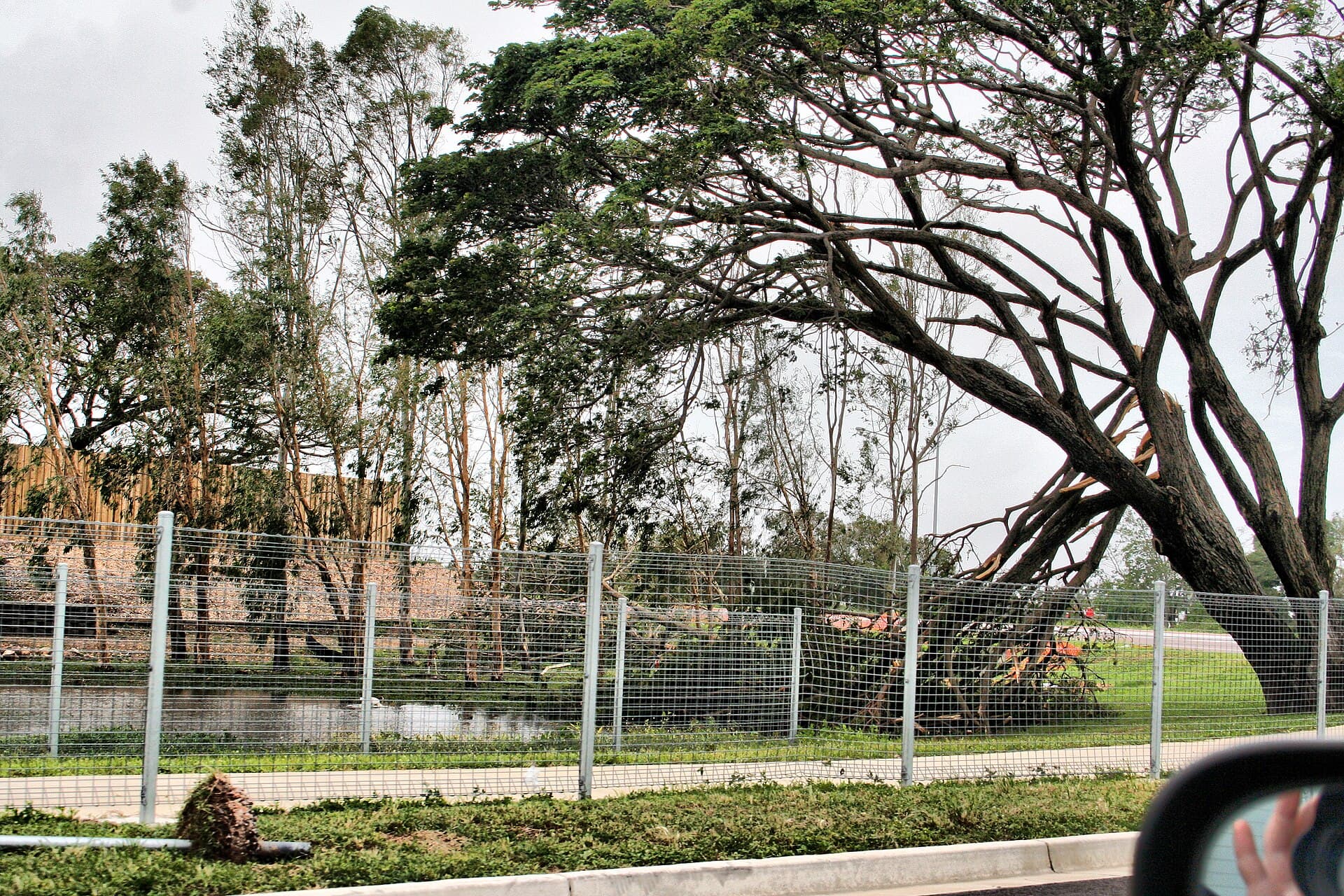
A solid driveway gate is a wall on a hinge or a track. Cyclone country, exposed ridges and river flats that see damaging winds should not be treated like a still cul-de-sac. Open infill, shorter leaves, rated hardware and a motor with a proper manual release are the conservative habits. After Severe Tropical Cyclone Yasi, plenty of otherwise tidy suburban streets showed the same pattern: the gate was the first thing twisted, because it had area, leverage and a lock that became a pivot.
Even outside named cyclones, a summer storm will throw a bin or a trampoline into a leaf. Walk the gate after wild weather. Check the track for silt and branches before you run the motor. A motor that drives a jammed leaf will strip a gear and then you are in cars-on-the-street week.
If you live in a mapped wind region, ask the supplier what they actually rate, and do not assume a pretty estate gate is an engineered one. This is not a substitute for an engineer on a difficult site.
Neighbours, setbacks and what it typically costs
Front fences and gates attract planning controls that side fences often escape. Height, transparency, setback from the corner, and whether a leaf may swing over the verge are council questions. Heritage and estate covenants add taste as a regulation. Ask before you fabricate.
A gate on a shared driveway is a neighbour agreement as much as a product. Dividing-fence law is usually about the boundary fence, not your automatic leaf, but courtesy and access still apply; the overview of who pays for dividing fences is the right starting map if the argument is really about the front screen.
Costs are a wide range on purpose. A simple manual steel swing pair might sit in the low thousands installed. A custom sliding leaf with a decent motor, photocells, a clean track and a matching Colourbond face commonly lands somewhere in a few thousand to well over ten thousand dollars depending on width, wind spec, automation brand and how ugly the excavation is. Fancy cladding, brick piers and sloping cantilever kits live above that. Use the fencing cost guide for the fence either side, and quote the gate as its own line.
A suburban gate that is sized for the car, footed for the clay, and honest about wind will still be opening after the storm photos are filed. That is a higher standard than matching the letterbox, and it is the one worth paying for.
Frequently asked questions
Is a sliding gate better than a swing gate on a suburban driveway?
Sliding wins where the leaf would otherwise swing onto a footpath, a slope or a parked car. Swing wins on a flat, deep driveway where you can keep the arc private and the hinges simple. The site decides more than the brochure.
Do automatic gates need a licensed electrician?
Mains connections, residual-current devices and any work in a meter box are electrician territory. The fencer can stand the posts and hang the leaf. Treat “we’ll wire it in” from an unlicensed crew as a reason to get another quote.
Will an automatic gate still work after a blackout or a storm?
Only if you planned for it — a manual release you can reach, batteries or a solar assist, and hardware that was not the first thing the wind took. After a cyclone or a fallen limb, inspect tracks, photocells and the leaf before you run the motor.
Filed under Install and maintain. Corrections: contact the desk.
More in Install and maintain
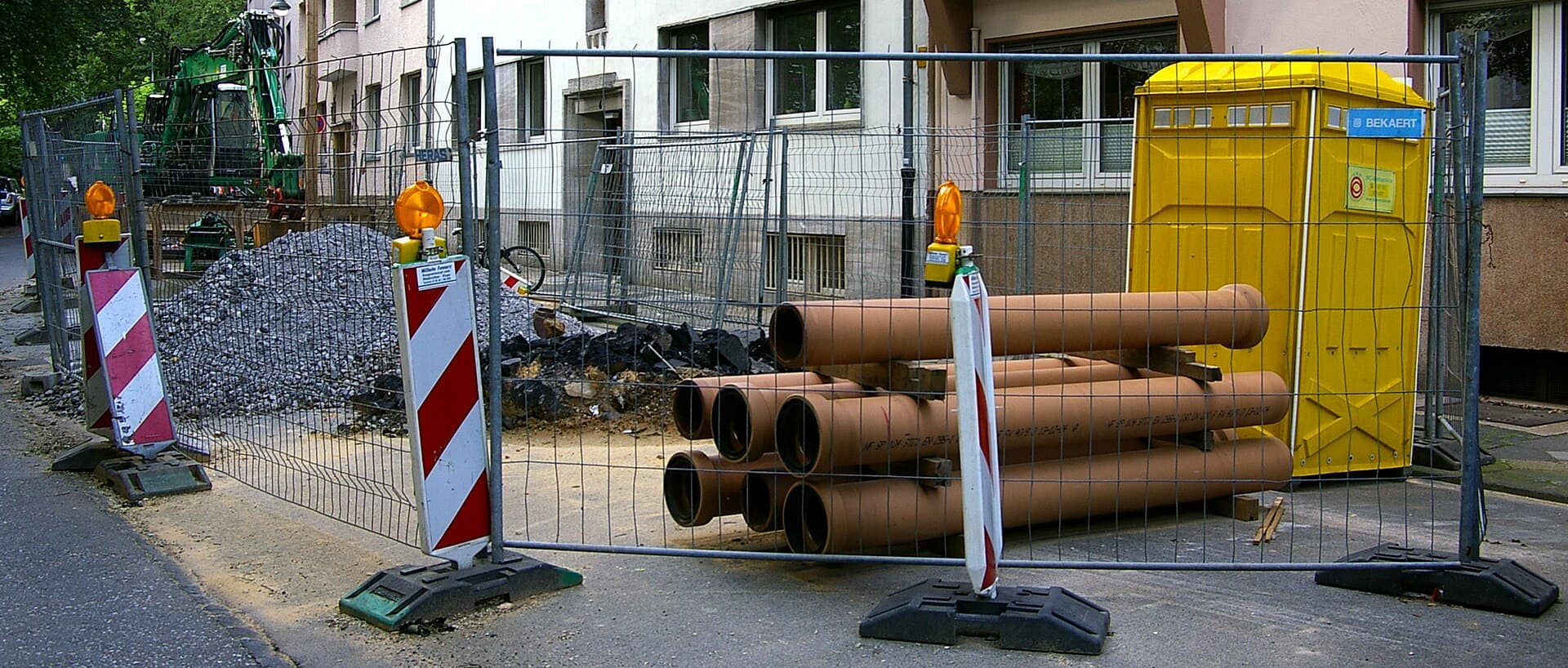
Temporary fencing on Australian building sites
How hoop-mesh hire fences actually work on suburban jobs — wind, shade cloth, pool-reno traps, and the difference between a site fence and a barrier that must still meet the rules.
Tom Laird · 3 September 2025

Fence maintenance through an Australian summer
A practical summer walk-down for Colourbond, paling and rural wire — washing, storm prep, clay after the first rain, and the repairs that stop a small fault becoming a rebuild.
Tom Laird · 6 August 2025
Choosing a fencing contractor — quotes, licences and what to compare
How to read a fencing quote in Australia, which licences actually matter, and the site questions that separate a proper crew from a cheap metre-rate.
Tom Laird · 31 March 2025